Read time: 3 minutes
One of the top questions we hear from engineers is: dimpled vs. non-dimpled domes — which is the right choice for my application?
The answer depends on your PCB design, product lifecycle requirements, and how the dome switch will be actuated in your product or application. Let’s break it down.
The Problem: Solder Mask Variations
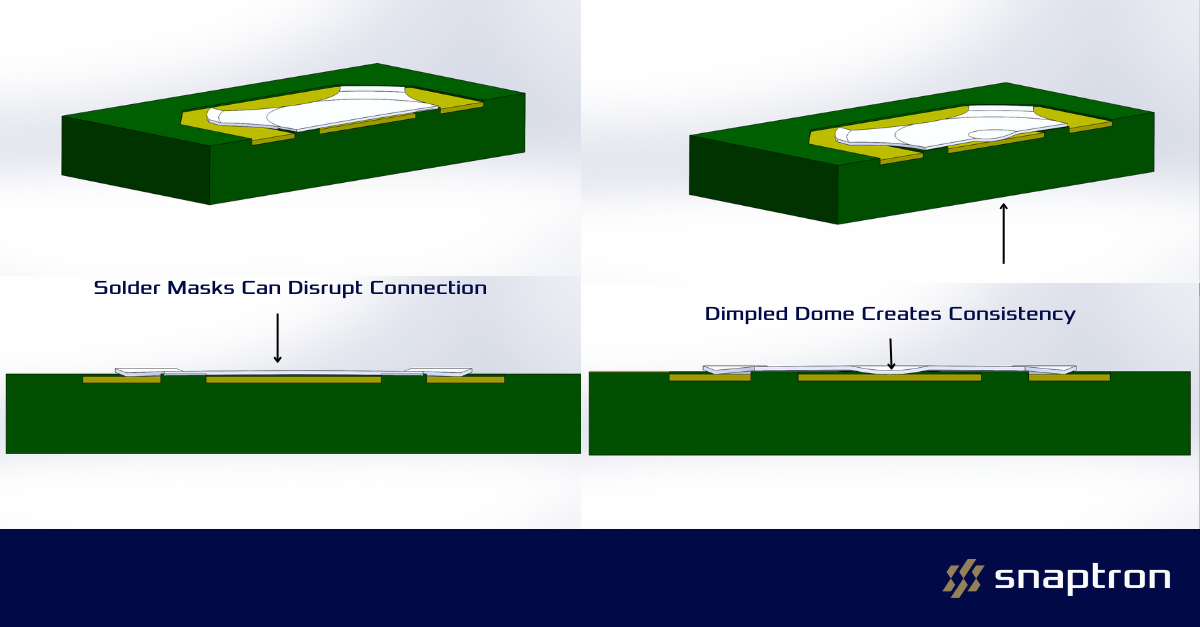
The green coating you see on most PCBs is the solder mask. While it’s critical for protecting copper traces, it can cause issues in the switch contact area, especially if it extends between the two contact pads under a dome.
Even small variations in solder mask thickness between PCB batches can cause inconsistent closures. If the dome can’t make solid contact, the result is missed presses, a mushy feel, or premature failures.
It’s important to keep the solder mask out of the switch contact area entirely. But in cases where that’s not possible, such as in legacy designs, adding a feature like a dimple can help overcome solder mask variations, ensuring performance.
Domes with Dimples
What they do:
A dimple concentrates the actuation force into a smaller point, helping “punch through” slight solder mask inconsistencies to ensure reliable contact.
Best for:
- Designs with solder mask between pads or slightly uneven contact surfaces
- Legacy or fixed products where PCB layout changes aren’t possible (e.g., avionics panels still in service after 20 years)
- Shorter-lifecycle products where plating wear over decades isn’t a concern
Watch out for:
Over many cycles, especially in high-force applications, the concentrated pressure of a dimple can wear out PCB plating, particularly softer finishes like ENIG. Gold plating is more resistant, but for mission-critical, high-lifecycle designs, dimples may shorten circuit board life.
Domes without Dimples
What they do:
Domes without dimples spread force evenly across the contact area, reducing localized wear on PCB pads. Here are a few examples:
Best for:
- PCBs with no solder mask in the contact area
- Designs where solder mask height and placement are tightly controlled
- Long-lifecycle products where minimizing plating wear is a priority
Watch out for:
If the solder mask is present or uneven, flat domes may produce inconsistent actuation or failed closures.
Ring Contact Domes
What they do:
Domes with a ring feature, also known as the RCG-Series Contact Geometry use a ring-shaped contact instead of a single point. This spreads force more evenly than a dimple while still delivering reliable contact, even for off-center presses.
Best for:
- High-force applications (e.g., rugged foot pedals, industrial controls)
- Designs with variable actuation points or large actuator surfaces
- Mission-critical or high-lifecycle products that need both durability and reliable off-center performance
Watch out for:
RCG domes are typically more expensive than standard domes, but they can prevent premature plating wear and deliver more consistent performance over time.

Quick Reference
- Dimples: Overcome inconsistent solder masks; shorter lifecycles; legacy PCB layouts.
- Without Dimples: Long life; no solder mask; even wear distribution.
- Ring: High durability; off-center presses; high-force or mission-critical use.
The Takeaway
If your PCB design is locked and solder mask is unavoidable, dimples can help you avoid costly design mistakes— but they may limit long-term durability under heavy use. Domes without dimples are ideal when you control the PCB design for maximum longevity. And when you need both high durability and tolerance for off-center presses, RCG domes offer a smart, balanced solution.
Need help selecting the right dome for your application? Contact our team, we can review your design and recommend the best fit.