Read time: 4 minutes
When engineers design products that rely on tactile feedback, such as medical devices, industrial controls, or consumer electronics, dome switch life becomes a critical performance metric. A dome switch’s life cycle rating determines the number of times it can be actuated before failure. Factors such as dome size, actuation force, and geometry play a significant role in overall durability.
In this article, we’ll explore how these design variables affect dome switch life, what trade-offs engineers must consider, and how to ensure reliable long-term performance in your application.
What Is Dome Switch Life Cycle Rating?
The life cycle rating of a dome switch refers to the number of actuations it can withstand before its tactile characteristics degrade or its electrical contact becomes unreliable. High-quality metal dome switches can often exceed five million actuations, depending on the dome’s size, force, and application environment.
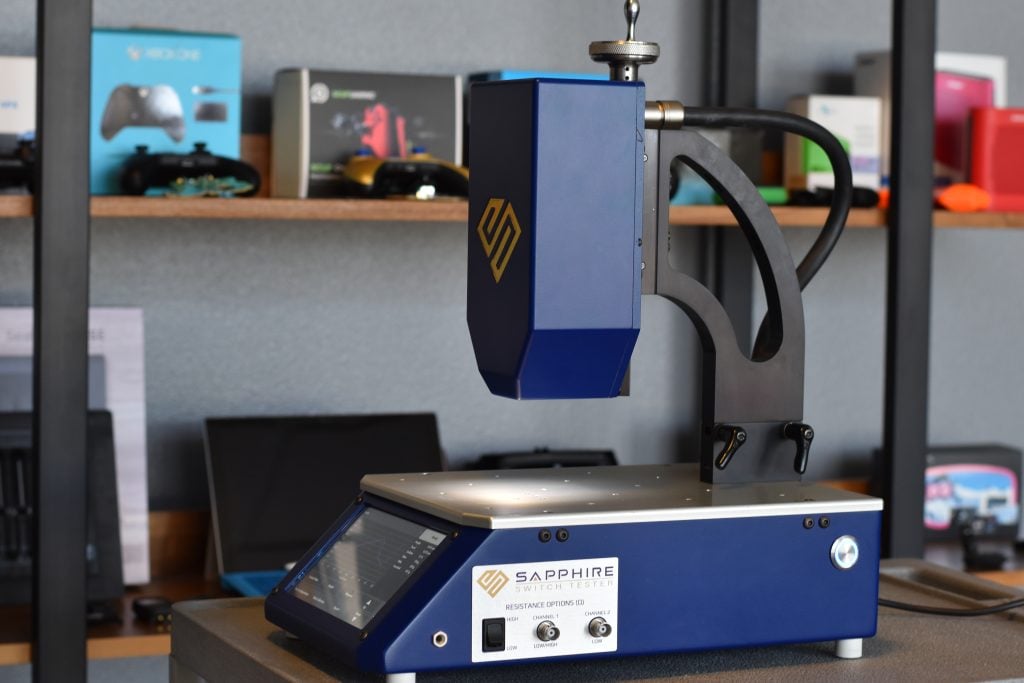

Switch longevity is typically measured using a life cycle test machine, which evaluates domes by repeatedly actuating them at 3-12 cycles per second. This mechanical test is conducted according to the ASTM F1578 standard and determines failure if the domes break before the specified life rating.
Key Factors That Affect Dome Switch Longevity
1. Dome Size
- Smaller domes (e.g., 4–6mm) typically have shorter travel distances and lower actuation forces, which can extend life cycles. However, their smaller surface area makes them more sensitive to contamination or misalignment.
- Larger domes (e.g., 10–20mm) provide stronger tactile feedback and higher travel, but the added stress on the dome material can reduce cycle life compared to smaller domes.
Design Tip: Select dome size based on both ergonomic needs and required life cycle. For high-use devices, smaller domes often provide better durability.
2. Actuation Force
- Lower-force domes (e.g., 180–250g) typically last longer, as they undergo less material stress per actuation.
- Higher-force domes (e.g., 400–700g) deliver strong tactile feedback but may reduce overall cycle life due to repeated high-stress deformation.

Design Tip: Balance user experience with durability. In applications where feedback is critical (like automotive or rugged devices), a higher force may be necessary, even if cycle life is slightly reduced.
3. Dome Shape and Geometry
- Four-leg domes distribute force evenly and provide long, consistent cycle life.
- Tri-leg domes may offer unique tactile feels, but can have reduced durability.
- Dimpled domes enhance off-center actuation and reduce electrical resistance; however, the design must account for mechanical stress concentration.
- Square four-leg or ring domes are the best geometries to choose when long life is a priority.
Environmental and Design Considerations
Cycle life isn’t only about geometry. External factors also influence performance:
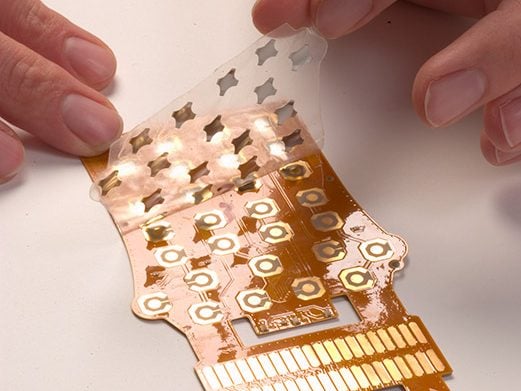
- PCB Plating: Gold plating on contact pads increases cycle life compared to ENIG, especially for high-actuation requirements.
- Contamination: Dust, moisture, or debris can shorten switch life by interfering with contact surfaces.
- Over-travel and actuation method: Excessive over-travel or poorly designed actuators can stress domes and reduce cycle life.
Design Tip: Pair dome selection with proper PCB pad design, actuator geometry, and protective overlays to maximize switch durability.
Testing and Validation
Regardless of the dome design, validating life cycle performance under real-world conditions is crucial. Using a dedicated tester ensures:
- Measured compliance with ASTM F2592 standards.
- Early identification of design trade-offs.
- Reduced field failures and warranty costs.
A switch tester, such as the Sapphire, allows engineers to track dome performance by simulating actuations and capturing force-displacement curves to verify performance across a product’s expected lifespan.
Final Thoughts
The life cycle of a dome switch is directly affected by its size, force, and shape, along with plating, environmental protection, and actuator design. Smaller domes and lower forces generally extend cycle life, while larger, high-force domes provide stronger feedback at the cost of some durability.
By carefully balancing these factors, engineers can design interfaces that deliver both reliable performance and a satisfying tactile experience. Pairing proper dome selection with robust testing is the key to success.
Need help specifying a dome for your application? Contact Snaptron’s engineering team to discuss your design requirements or request samples.