Read time: 9 minutes
Not every product can use an off-the-shelf switch. Medical devices often require a specific actuation force for gloved operations. Industrial equipment may need to operate for millions of cycles without failure. A consumer electronic might need a unique tactile feel that differentiates it from its competitors. Because when standard components fall short, engineers turn to custom tactile switches. By modifying dome geometry, force, contact configurations, and packaging, manufacturers can create a switching solution tailored to the exact requirements of the application.
At Snaptron, we manufacture custom tactile switches and dome arrays within the United States, offering delivery in just four weeks. Whether you’re enhancing user experience, improving reliability, or addressing a difficult mechanical challenge, a custom switch can help turn your concept into a reality.
What Are Custom Tactile Switches?
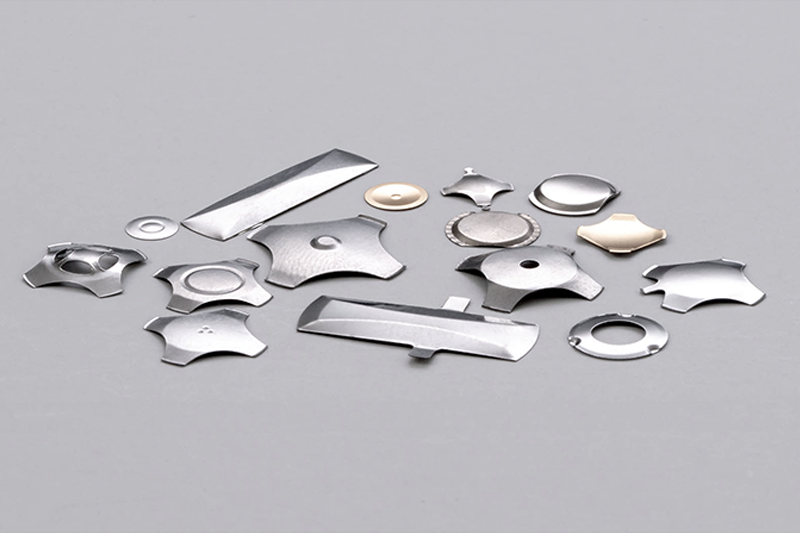
A custom tactile switch is a switch engineered to meet your application’s specific needs. Instead of relying on off-the-shelf components, you can adjust key characteristics such as:
- Actuation force
- Dome diameter
- Dome shape
- Tactile response
- Contact configuration
- Plating
- Packaging format
- Array layout

These adjustments ensure your switch meets the mechanical, electrical, and user-experience requirements of your product. In many cases, a custom tactile dome switch is a better fit than adapting your design to a standard component.
Why Engineers Choose Custom Tactile Switches
Optimize the User Experience
Firstly, the tactile feel of a switch shapes how users interact with your product. A surgeon, an equipment operator, and a driver each expect a different level of tactile feedback from their controls. Custom tactile switches allow engineers to fine-tune:
- Snap feel
- Actuation force
- Travel
- Tactile ratio
- Sound profile
| Custom Feature | Why You Might Change It |
| Actuation Force | Accommodate gloved users or prevent accidental activation |
| Dome Diameter | Increase the actuation area or fit space constraints |
| Dome Shape | Improve tactile feel or life cycle |
| Contact Configuration | Enable multiple electrical closures |
| Plating | Increase durability or reduce contact resistance |
The result is a user interface built for your application or brand, without the limitations of standard switch options.
Solve Space Constraints
Secondly, modern products continue to get smaller, thinner, and more complex. That’s why custom tactile dome switches enable engineers to optimize switch footprint while maintaining desired performance characteristics.
Whether you need a unique diameter, modified geometry, or specialized packaging, a custom design can help maximize available space without sacrificing your products’ tactile performance.
Improve Reliability
Thirdly, switches are among the most frequently used components in a product. As a result, custom designs can help improve long-term reliability by matching the dome geometry, force, and materials to the application’s requirements.
In other words, for products expected to endure millions of actuations, this level of optimization can significantly improve performance throughout the product’s lifecycle.
What Can Be Customized?
Not all custom tactile switches require a completely new design. In fact, in many cases, engineers can afford to modify just a few key characteristics to improve performance, reliability, manufacturability, or the user experience.
Actuation Force
Actuation force determines how much pressure a user must apply before the switch activates. For instance, lower-force domes often work well in handheld devices, medical equipment, and applications that require frequent use. Conversely, higher-force domes can help prevent accidental activation and provide more pronounced tactile feedback in rugged environments.
Common applications include:
- Medical devices designed for frequent operation
- Industrial controls used while wearing gloves
- Foot pedals that require deliberate activation
Dome Diameter
Dome diameter affects both the size of the actuation area and the tactile characteristics of the switch. Generally, larger domes typically provide a broader actuation area and stronger tactile response. On the other hand, smaller domes help engineers maximize PCB space while maintaining reliable switch performance.
Examples:
- Compact handheld electronics
- High-density control panels
- Large-format user interfaces
Dome Shape and Geometry
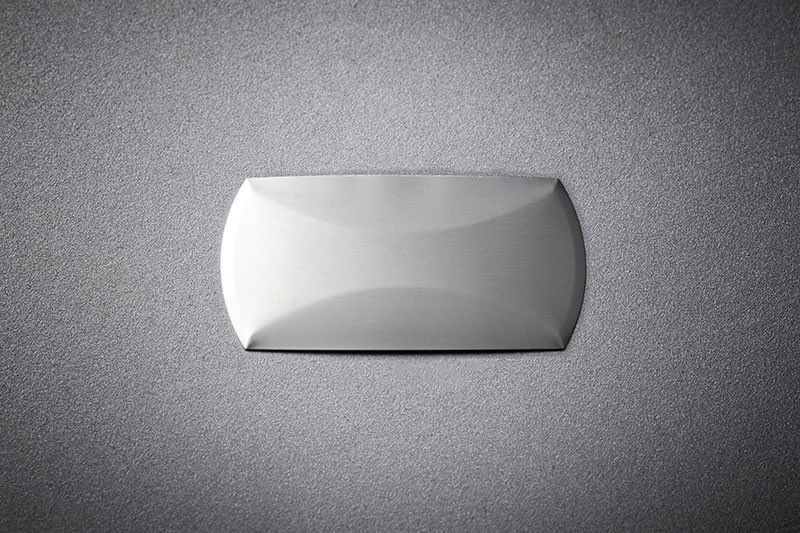
Different dome geometries create different tactile experiences and performance characteristics. For example, four-leg domes distribute force evenly and often provide excellent cycle life. Similarly, dimpled domes can improve off-center actuation and reduce contact resistance. Meanwhile, ring contact domes may provide enhanced electrical performance in specific applications.
Examples:
- High-cycle industrial equipment
- User interfaces requiring off-center actuation
- Products requiring a unique tactile feel
As a result, engineers can fine-tune both the tactile feel and electrical performance of a switch by selecting the geometry that best aligns with their design requirements.

Contact Configuration
Some applications require more than a simple single-pole, single-throw (SPST) switch. Custom contact configurations can support multiple electrical closures, normally closed functions, or specialized switching requirements that standard tactile switches cannot accommodate.
Examples:
- Redundant switching applications
- Safety-critical controls
- Specialized electronic interfaces
Plating and Materials
Material selection directly affects switch performance, conductivity, and longevity. Depending on the application’s environmental and life-cycle requirements, engineers may specify nickel, silver, gold, or specialized plating combinations. For example, certain plating materials offer improved corrosion resistance, while others support higher cycle life or lower contact resistance.
Examples:
- Medical devices exposed to cleaning agents
- Industrial controls in harsh environments
- Applications requiring millions of actuations
Packaging and Array Layout
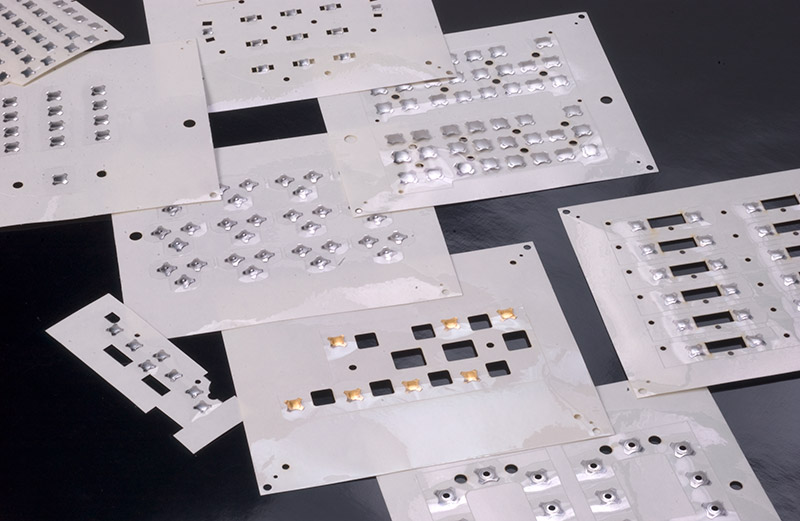
Customization extends beyond the dome itself. In addition to force, geometry, and materials, engineers can specify custom dome arrays, adhesive systems, carrier materials, venting features, and packaging formats to simplify assembly and improve manufacturing efficiency.
For example, a custom dome array can position multiple domes in a single adhesive-backed assembly, reducing handling and improving placement accuracy during manufacturing. Likewise, specialized carrier materials and adhesive systems can help accommodate environmental requirements or assembly processes.
Examples include:
- Membrane switch assemblies
- Flexible circuit designs
- Automated production environments
Ultimately, the best custom tactile switch designs don’t start with a dome. They start with an application requirement. By first understanding the performance goals of a product, engineers can customize force, geometry, materials, and packaging to create a switch that performs exactly as intended.
Custom Metal Dome Switches vs. Standard Switches
Standard tactile switches work well for many applications, but they’re meant to satisfy a broad range of use cases. Custom metal dome switches allow engineers to design a switch that’s tailored to a specific application and environment. For example, a marine control panel may require a specialized adhesive system to withstand moisture, vibration, and temperature fluctuations.
Take, for instance, AirTurn, a manufacturer of musical tools, which needed stronger tactile feedback across a large actuation area in its Bluetooth foot pedal. Snaptron developed a custom high-force GX dome solution that improved tactile response while maintaining the pedal’s low-profile design. Ultimately, knowing when to select a custom switch or not comes down to the specific application.


| Feature | Standard Switches | Custom Tactile Switches |
| Force Options | Limited | Application-specific |
| Geometry | Fixed | Customizable |
| Tactile Feel | Standardized | Tuned for user experience |
| Packaging | Standard formats | Custom materials, arrays, and layouts |
| Integration | General purpose | Designed around your product and manufacturability constraints |
So, for products where user experience, reliability, or space constraints are critical, customization often delivers the most measurable benefits.
Custom Dome Arrays Simplify Assembly
Many engineers require more than a single custom switch. They need an entire interface solution. In these situations, custom dome arrays make sense. Custom dome arrays combine multiple tactile domes, in whatever position you specify, into a single adhesive-backed assembly, arriving ready for installation. As a result, manufacturers can simplify assembly and improve consistency across production runs.
Benefits of dome arrays include:
- Faster assembly
- Improved placement accuracy
- Reduced handling
- Greater manufacturing consistency
- Simplified inventory management
Additionally, our engineers routinely work with customers to develop custom dome arrays that integrate seamlessly into membrane switches, flexible circuits, and printed circuit board (PCB) designs. By combining multiple domes into a single assembly, engineers can reduce assembly time while improving placement accuracy and overall manufacturing efficiency.
From Concept to Production in as Little as Four Weeks
One of the biggest concerns engineers have when evaluating a custom switch solution is lead time. Traditional custom component development can take months. However, because Snaptron manufactures here right in the USA, we can deliver custom parts in as little as four weeks.
The ordering process is simple and straightforward:
- Submit your initial inquiry and design requirements to our team.
- Our engineers review your specifications and provide a custom recommendation.
- After approval, we create and send prototype samples for your evaluation.
- Once the prototype meets your needs, we move forward with production and delivery.
As a result, this transparent process helps engineering teams know what to expect and streamlines the journey from concept to prototype. This rapid turnaround allows engineering teams to:
- Accelerate prototyping
- Validate designs faster
- Reduce development delays
- Move to production sooner
For many projects, speed can be just as important as performance.
When Should You Consider a Custom Tactile Switch?
Custom tactile switches are not necessary for every application. However, they can provide significant advantages when standard components cannot meet your design requirements. A custom tactile switch may be the right solution if your application requires:
- A unique tactile feel
- Non-standard actuation forces
- Specialized dome geometries
- Space-constrained designs
- Specific sound requirements
- High-cycle applications
- Multiple electrical closures
- Bi-stable or non-tactile
- Custom packaging or array layouts
- Faster prototype turnaround
Ultimately, the decision comes down to balancing performance, manufacturability, and cost.
Custom tactile switches often become more cost-effective in medium- to high-volume applications, where the benefits of optimized performance and simplified assembly can outweigh initial tooling and setup costs. Meanwhile, for lower-volume projects or early-stage development, our engineering team can help determine whether a custom solution aligns with your technical requirements, production goals, and budget.
Final Thoughts
Finally, custom tactile switches give engineers the flexibility to design products around their users instead of around standard components. Whether you need a unique force profile, specialized geometry, or a fully integrated dome array, customization can improve user experience, reliability, and assembly efficiency.
Snaptron’s engineering team works directly with customers to develop custom tactile dome switches and custom dome arrays that meet the exact requirements of their application. So, with U.S.-based manufacturing and custom lead times as short as four weeks, we help engineering teams move from concept to production faster.
Learn more about our custom tactile switch capabilities or contact our team to discuss your vision for your application.